


AI Transformation
We work on the human side of your AI transformation
Every major transformation needs three aligned components to be successful:
people, processes and platforms.
What AI should own. What humans must own.
Before any AI transformation can hold, one question needs an answer: what should AI govern, and what must humans govern?
AI should own
Pattern recognition at scale
Compliance verification across large networks
Data synthesis and reporting
Demand forecasting and inventory optimization
Routine decision support and scheduling
Real-time performance monitoring
Personalization at volume
Anomaly detection and early warning
Humans must own
Judgment calls that carry ethical weight
Relationships that require genuine presence
Decisions made with incomplete information where values must govern
The conversation with the person who is struggling
Creative synthesis rooted in lived experience
Defining what AI is for and what it should never touch
Reading the room when the data says one thing and the culture says another
Anything where being wrong has consequences a system cannot understand
Approach
How we work
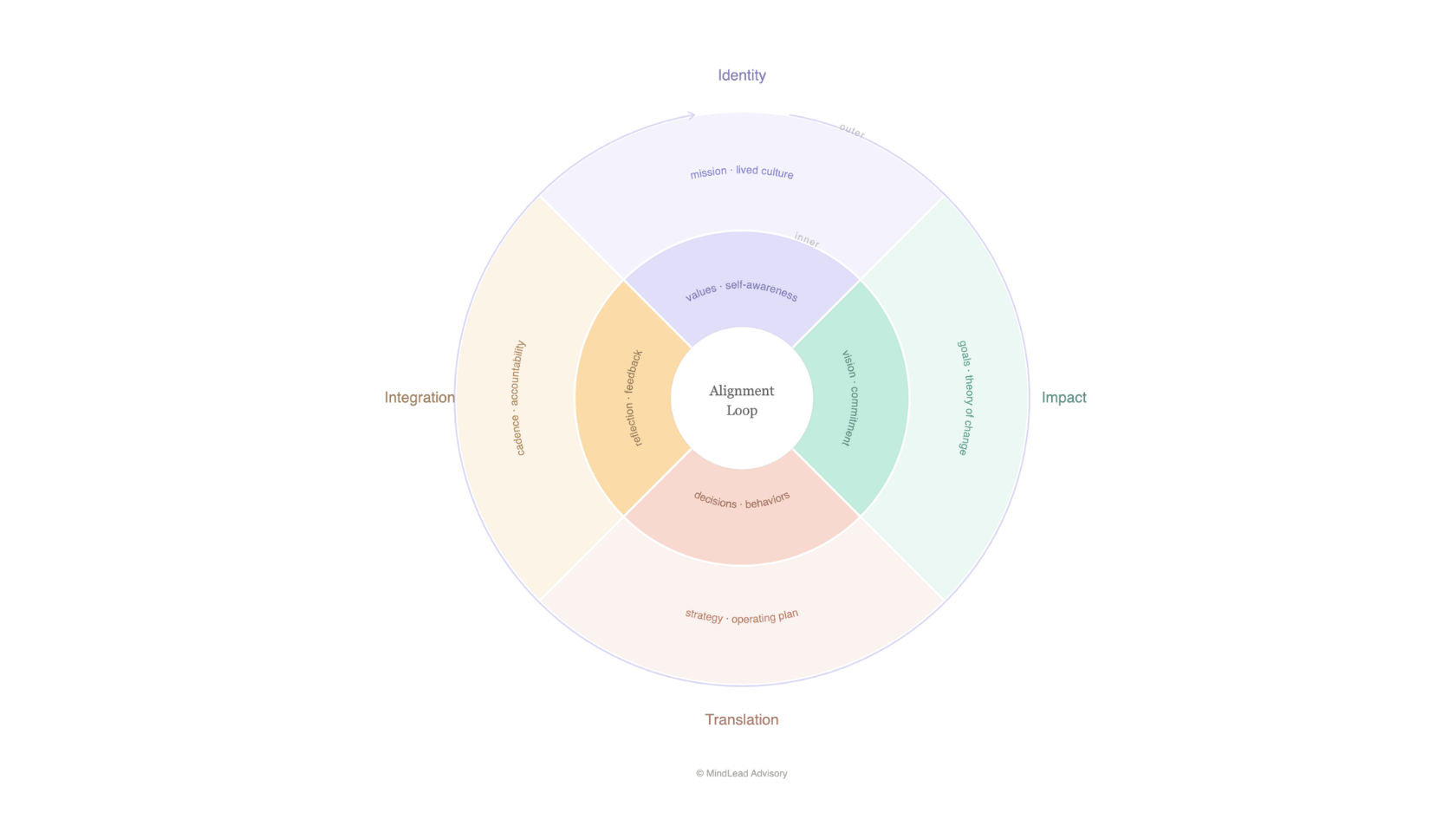
We use the Alignment Loop as the diagnostic and design framework for every AI transformation engagement. Four dimensions. Each with an inner layer the technology cannot address, and an outer layer where the technology creates new capability. Both matter. Neither alone is sufficient.
What this looks like in practice
Phase 1
The Diagnostic
We make an assessment of your organization’s people, processes and platforms to truly understand what can and should be automated and where humans need to be elevated accordingly.
Phase 2
The Alignment Design
We start with the leadership alignment, the human/AI boundary framework, the operating norms and feedback mechanisms that make the technology serve the organization rather than the other way around.
Phase 3
Integration and Momentum
We build the feedback loops and operating cadence that keep the transformation honest over time and the culture signals that tell your people what they are for in this new configuration.
Who we work with
Who this is for
CCOs, COOs, and transformation leaders who sense that the technology is not the hardest part. Founders who want to build AI into their organization in a way that strengthens rather than hollows out the culture they have built. Leadership teams who have seen a transformation stall and want to understand why before the next one begins
Who this is not for
Organizations looking for an AI implementation partner. We are not the team that builds the tools. We are the team that ensures your organization is aligned enough to benefit from them, and human enough to know when not to.
Where is your AI transformation losing alignment?
Most organizations find out eighteen months after deployment, in a culture survey, a talent retention problem, or a quality issue the dashboard did not predict. The diagnostic conversation finds it earlier.